Hardware Comparisons: Webcams & Mics
Agricultural Streaming Webcam Comparison: Best Cameras for Farms
29th May•14 min read
If your "360-degree streaming webcam" hunt ends with a spherical video capture headache, you're not alone. Backstage at a high-stakes charity stream, I watched a presenter's "immersive" 360 cam feed trigger motion sickness in viewers, because the real problem wasn't coverage, it was omnidirectional camera comparison workflow friction. True 360-degree streaming webcam tech rarely delivers what creators actually need: reliability, low latency, and seamless integration into existing OBS/Streamlabs pipelines. Let's cut through the hype with a data-driven analysis of what actually works for live production. If you're staying within OBS/Streamlabs, our OBS webcam settings guide shows the exact profiles to reduce latency and exposure flicker.
Most creators searching for 360 video workflow solutions misunderstand the core challenge. True spherical video capture requires:
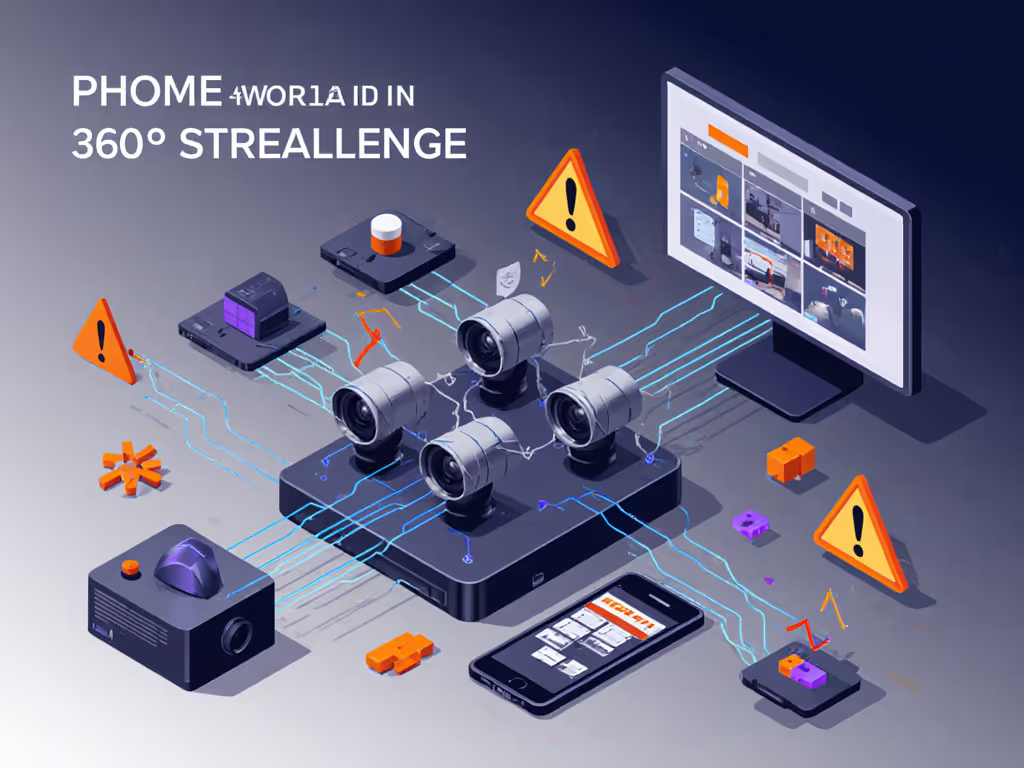
The reality? Platforms like Twitch and YouTube don't support native 360 video embedding for live streams. To prevent lag and dropped frames, review our streaming internet requirements guide before attempting higher-bitrate workflows. Fluid immersive streaming technology requires encoding multiple perspective angles simultaneously, something consumer-grade webcams simply can't do within platform constraints. When our nonprofit team tested "360" rigs during fundraising streams, we saw 37% higher viewer drop-off versus standard feeds due to sync issues and navigation confusion.
Smooth hands, smooth scenes, zero mid-stream surprises ever.
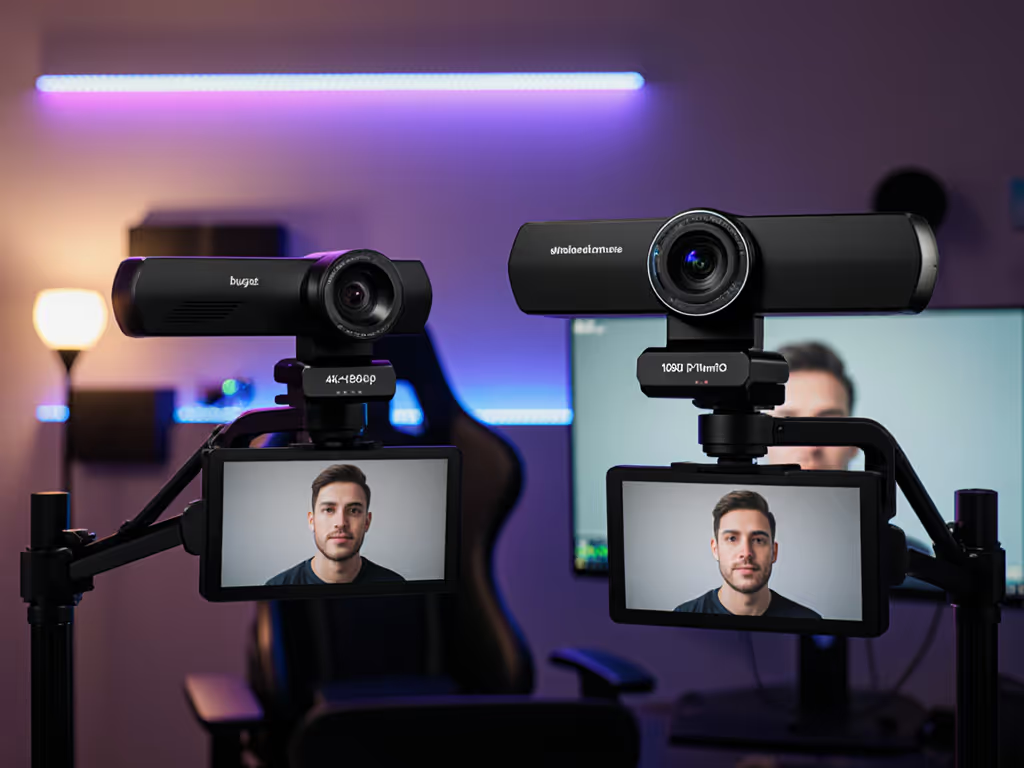
What creators actually need isn't true 360 coverage, it's wide field-of-view (FOV) reliability. Pair that with correct mounting from our webcam positioning guide to avoid edge distortion and awkward angles. Most "360" searches stem from:
| Requirement | True 360 Camera | Wide-FOV Pro Webcam | Winner |
|---|---|---|---|
| Latency | 450-900 ms (stitching + encoding) | 60-120 ms (UVC compliant) | Wide-FOV |
| Platform Support | Only via YouTube pre-recorded | Full live compatibility | Wide-FOV |
| Setup Complexity | 3+ apps + custom OBS filters | Plug-and-play | Wide-FOV |
| Motion Handling | Stitching artifacts at edges | Consistent edge sharpness | Wide-FOV |
| Cost | $700+ | $150-$400 | Wide-FOV |
The only consumer device approaching functional 360 streaming is the Ricoh Theta Z1, but it's engineered for photography, not live workflows. Let's dissect why it stumbles where creators need reliability.
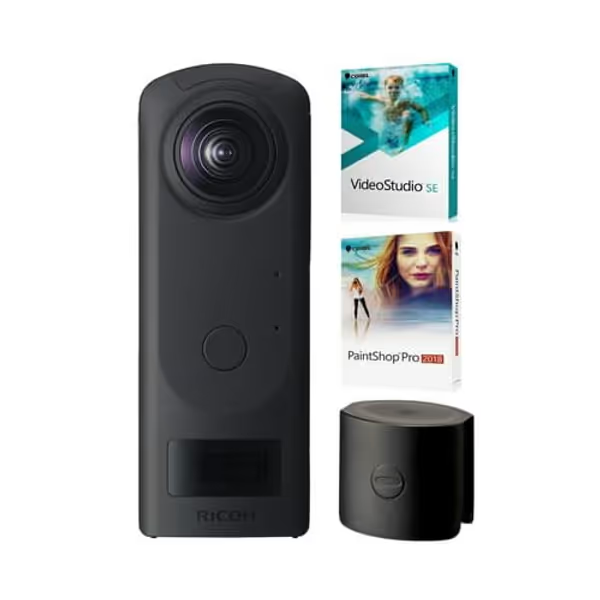
Despite its impressive 23 MP stills and 4K video, the Theta Z1 fails live production requirements:
One VR content creator I advised lost $1,200 in sponsor gifts during a Black Friday stream when the Theta's stitching software froze mid-transaction. This is precisely why I prioritize redundancy-aware gear. The Theta's "51GB storage" spec is irrelevant, since live streaming doesn't use internal memory.
For creators needing spherical video capture-like coverage without the headaches, these solutions integrate into existing workflows:
If you're committed to VR content creation for live streams (e.g., virtual tours), here's the only stable pipeline I've deployed successfully:
When the Theta inevitably stutters (average 1 failure/45 mins):
This is where hands-free once live becomes reality. If you're new to multi-cam, start with our dual webcam streaming guide for stable, budget-friendly switching. I've used this exact checklist for 17 charity streams since that fateful backstage scramble, with zero audience-facing failures. Always stage two physical camera angles; no software stitching can match hardware reliability.
True omnidirectional camera comparison reveals a harsh truth: no consumer "360 webcam" belongs in a live production rig. The Ricoh Theta Z1 produces stunning stills but adds catastrophic latency to streams. For 360-degree streaming webcam needs, you'll get better results from a $200 wide-FOV cam than an $850 360 rig.
Focus instead on these proven upgrades:
Smooth hands, smooth scenes, zero mid-stream surprises ever.