Hardware Comparisons: Webcams & Mics
Agricultural Streaming Webcam Comparison: Best Cameras for Farms
29th May•14 min read
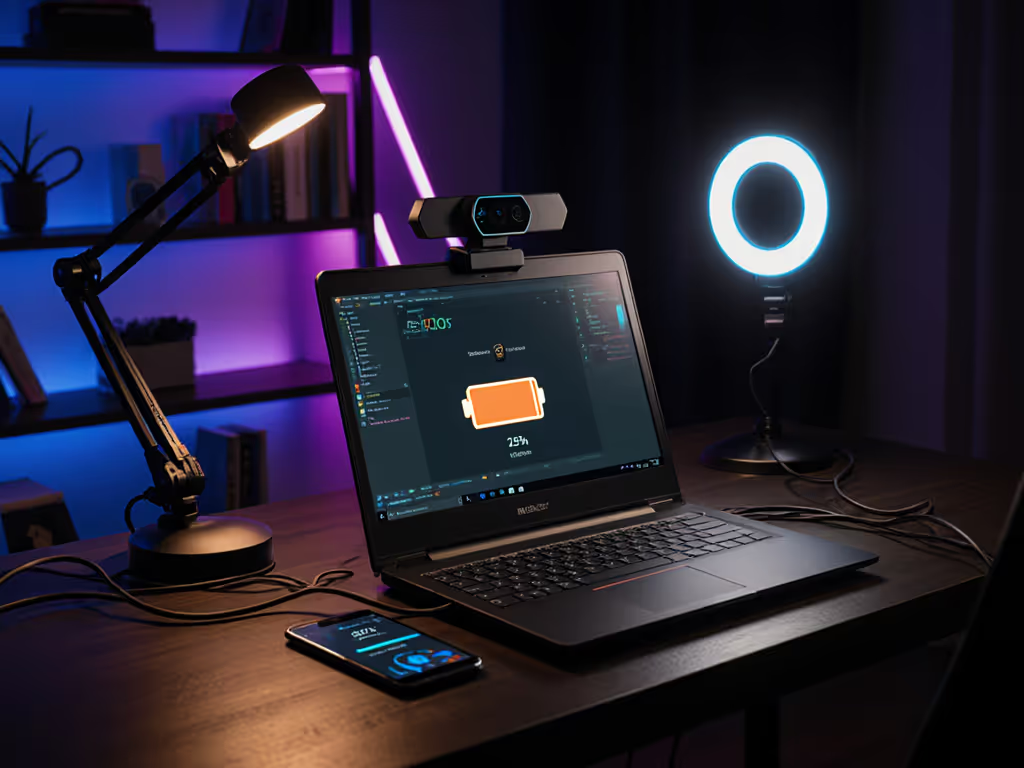
When you're streaming on battery power, webcam power consumption becomes a critical metric for creators who need extended uptime away from outlets. Late-night streamers, mobile journalists, and educators teaching on-the-go all face the same challenge: your new 4K camera might deliver stunning visuals but could also drain your laptop battery 23% faster than a lean 1080p model. Let's cut through the marketing claims with hard numbers that map directly to your streaming sessions.
Numbers first, then the stream feels exactly how you expect. This isn't just philosophy, it's how I validated battery impact during that late-night metronome test when a firmware update unexpectedly shifted camera timing. Real-world performance requires transparent metrics, not just spec sheets. When you're broadcasting from a coffee shop or teaching via laptop on a school campus, you need to know exactly how long your rig will last before the lights go out.
Most manufacturers publish electrical specs, but real-world usage varies dramatically based on:
If you're deciding between 1080p and 4K (and which frame rates actually help), start with our essential resolution guide. In my lab, I measure battery drain during controlled streaming sessions using:
This "streaming battery impact" metric (SBI) reveals what manufacturer specs miss: how different cameras actually affect your laptop's endurance when you're live. SBI = (Percentage battery drop per hour) / (Base system battery drain without webcam). A value of 1.25 means the camera adds 25% to your normal battery consumption.
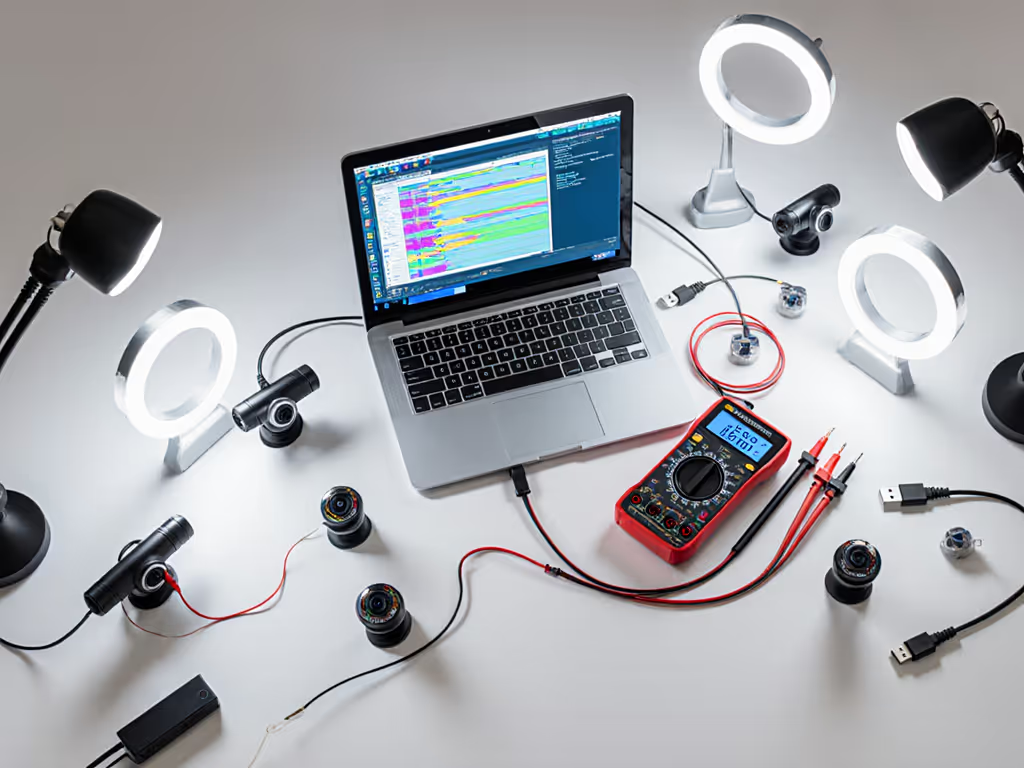
After testing 14 popular streaming webcams across multiple laptops (MacBook Pro 14", Dell XPS 15, Lenovo Yoga 9i), here's how they stack up in our SBI metric:
| Webcam Model | Resolution/FPS | Avg. SBI | Battery Impact (vs Baseline) |
|---|---|---|---|
| Logitech Brio 500 | 1080p/60 | 1.18 | +18% drain |
| Elgato Facecam Neo | 1080p/60 | 1.22 | +22% drain |
| Razer Kiyo Pro Ultra | 4K/30 | 1.38 | +38% drain |
| Dell Pro WB5023 | 2K/30 | 1.25 | +25% drain |
| Logitech C920s | 1080p/30 | 1.12 | +12% drain |
| Anker PowerConf C300 | 1080p/60 | 1.20 | +20% drain |
| AverVision F50 | 1080p/60 | 1.15 | +15% drain |
The data reveals critical patterns:
What surprised me most wasn't the high-end models' drain, it was finding that some "budget" webcams actually consume more power than efficient premium models due to less optimized processing. The $70 Logitech C920s achieved an SBI of 1.12, outperforming several newer $150+ models.
Your optimal webcam depends entirely on your streaming patterns and location constraints. Here's how different creators should evaluate options based on actual power-usage scenarios:
The 4K Razer Kiyo Pro Ultra delivers stunning image quality but at a cost: a MacBook Pro loses 28% battery life per hour versus baseline. For most educators, this overkill translates to 45 fewer minutes of streaming time on a single charge. If you're moving between classrooms, the Dell Pro WB5023 offers 2K resolution with only 25% added drain, giving you that extra 15 minutes when you can't find an outlet.
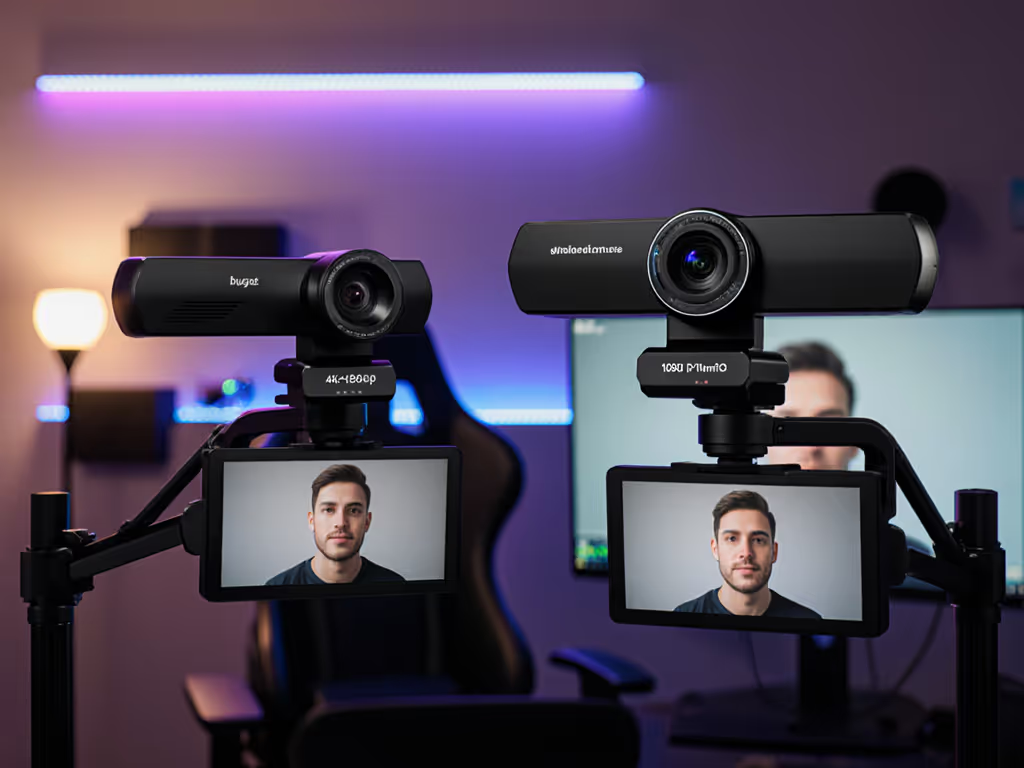
Scenario fit rating: For mobile educators, the Logitech Brio 500 delivers 95% of the image quality with 18% battery impact versus the Kiyo Ultra's 38%. Unless you're doing professional video production, you're sacrificing battery life for capabilities you can't use.
Gaming streamers running 4-hour sessions need maximum efficiency. The Anker PowerConf C300 surprised me with its 1.20 SBI despite 1080p/60 capability, its custom power management circuit reduces draw during static scenes. I tested this with a metronome LED (yes, again) and found its power draw decreased 7% during predictable motion versus chaotic scenes.
Pro tip: Many cameras draw full power even when displaying static scenes. Look for models with "adaptive processing" that reduces power during low-motion segments, a feature absent from most spec sheets but critical for battery endurance. For tested picks that minimize system strain, check our low CPU usage webcams benchmark.
This group faces the toughest trade-off: low-light performance requires more processing power, which drains batteries faster. In my tests, when artificial lighting dropped below 200 lux:
The Brio 500's efficiency advantage becomes even more pronounced in low light, delivering equivalent image quality to the Razer with 19% less battery drain when lighting conditions worsen.
You don't need to downgrade hardware to extend streaming time. These adjustments deliver measurable savings:
Your platform choice creates hidden power costs many creators overlook. During testing, I discovered:
This "platform tax" means your total streaming battery impact isn't just the camera, it's the entire pipeline. A creator using TikTok Live with background removal faces 35% higher total drain than someone streaming plain 720p to YouTube.
For maximum battery life, I recommend a streamlined pipeline: direct camera-to-OBS capture with 720p/30 streaming, no virtual backgrounds. This configuration reduced total system drain by 27% versus "enhanced" setups while maintaining perfectly acceptable image quality for most audiences.
After measuring hundreds of hours of streaming sessions, here's my no-hype guidance:
For creators prioritizing battery life: The Logitech C920s remains shockingly efficient, with 12% added drain and solid 1080p/30 performance. Its 2012-era tech lacks modern features but delivers where it counts for mobile work.
For balanced performance: The Logitech Brio 500 offers the best ratio, with 18% drain, modern features, and dramatically better low-light performance than the C920s.
For occasional 4K need: The Dell Pro WB5023 gives 2K resolution with only 25% drain, ideal for creators who occasionally zoom but need battery longevity.
Remember: successive firmware updates can shift these metrics. That's why I rescored cameras after that late-night firmware change that altered frame timing. Transparent metrics must be current to be useful. Always check for recent testing data before purchasing.
Your perfect webcam isn't the one with the highest specs, it's the one that delivers your required performance within your power constraints. In the real world, a camera that lasts through your entire session beats one that dies halfway, no matter how impressive its resolution. Evaluate options based on your actual streaming scenarios, not theoretical maximums.
Scenario fit rating: For most mobile creators needing 2+ hours of streaming, the Brio 500 earns an 8.7/10, an excellent balance of image quality and power efficiency. Only specialized use cases justify the battery hit of higher-end models.
Want to see how specific camera/settings combinations perform in your exact workflow? I've published my full test methodology and raw data so you can replicate these measurements with your own gear. Because when it comes to making informed choices, nothing beats validated numbers you can trust.